


Kitzbühel Oldtown: Streets, Houses and History
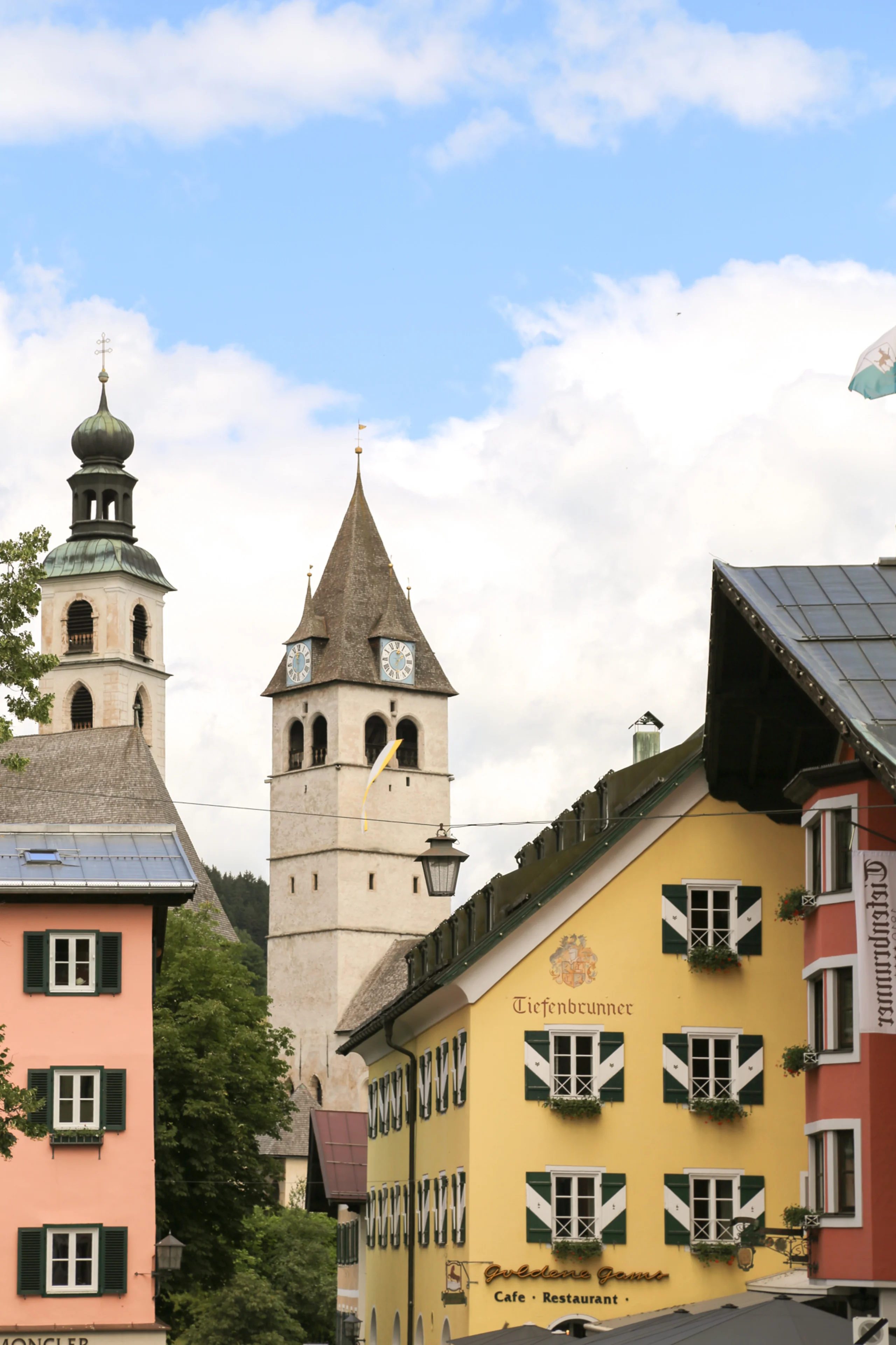
Kitzbühel Oldtown
Kitzbühel Old Town: The Streets, Buildings and History to Know Before You Visit
Kitzbühel is known as a winter sports legend, home of the Streif and one of the Alps’ most elegant destinations.
But visitors who come only for the skiing miss an important part of the town.
Kitzbühel Old Town does not tell its story in a single museum. Its history lives in its houses, gates, churches and streets. Once you know what to look for, you begin to understand why Kitzbühel looks the way it does.
The historic centre dates back to the medieval town. Its distinctive rows of houses, Gothic churches and later Baroque additions reflect, above all, the economic prosperity created by mining.
Kitzbühel Old Town at a Glance
| Question | Short answer |
|---|---|
| How old is Kitzbühel? | The name “Chizbuhel” was first recorded in 1165. Kitzbühel received town rights on 6 June 1271. |
| What is the historic centre? | Mainly the Vorderstadt and Hinterstadt areas, together with the surrounding churches, gates and historic town houses. |
| What defines the townscape? | Gabled houses, colourful façades, historic portals, bay windows, churches and remnants of the medieval fortifications. |
| What should you not miss? | Jochberger Tor, Museum Kitzbühel, St Catherine’s Church, Vorderstadt, the Town Hall, St Andrew’s Church and the Church of Our Lady. |
| How much time do you need? | Around 1.5 to 2 hours for a first walk. Allow more time if you want to visit the museum and churches. |

Visitors who want to understand the town in greater depth can join an official guided tour. The regular tour lasts around 1.5 hours and is free with the Kitzbühel guest card, KitzCard.
Why Kitzbühel Old Town Looks Different from Many Alpine Towns
Part of Kitzbühel’s appeal is that it does not simply feel like a historic mountain village.
It was a real town.
That distinction matters.
On 6 June 1271, the Bavarian Duke Ludwig II granted Kitzbühel town rights. The elevation to town status was also linked to the fortification of the settlement. At the time, Kitzbühel occupied a strategically important position on the southeastern edge of the Duchy of Bavaria.
The medieval town was later shaped strongly by mining. In particular, the silver and copper deposits at Rerobichl, north of Kitzbühel, brought considerable wealth during the 16th century. That economic prosperity left a direct mark on the townscape.
Vorderstadt and Hinterstadt
Visitors walking through Kitzbühel for the first time may wonder about these two names.
Vorderstadt and Hinterstadt are not modern names for two separate neighbourhoods. They are part of the historic structure of the town centre.
The rows of houses remain an essential part of the old town. Between them are passages, courtyards and St Catherine’s Church.
For anyone interested in history, Hinterstadt is particularly rewarding. It is home to the Town Hall, Museum Kitzbühel and several important historic administrative and town houses.
What the Colourful Façades Have to Do with Alfons Walde
The colourful façades are among the most recognisable images of Kitzbühel.
They are not simply colourful by chance.
The appearance of the town centre is strongly influenced by the ideas of Kitzbühel painter and architect Alfons Walde. His paintings helped establish the visual image of Kitzbühel internationally. The colours of the façades continue to reflect this design tradition.
So when you walk through the old town, do not look only at individual buildings.
Look at the entire row of houses.
It is the combination of colours, gables, roofs and surrounding mountains that creates the unmistakable Kitzbühel townscape.
The Most Important Streets and Routes Through the Old Town
1. Vorderstadt
Vorderstadt is the classic place for an elegant stroll.
This is where historic architecture, shops, restaurants and modern Kitzbühel come together.
If you enjoy photography, do not focus only on the shop windows. The upper floors are often more interesting. Many buildings were extended during the 16th and 17th centuries and received more elaborate façades, portals and bay windows.
One particularly charming detail is the historic ground floors. The rounded portals of many houses date from a time when these buildings also contained workshops and craft businesses.
2. Hinterstadt
Hinterstadt is less a single attraction than a historic architectural ensemble.
Here you will find:
- the Town Hall
- Museum Kitzbühel
- the former southwest tower of the town fortifications
- historic administrative buildings
- old town houses
- courtyards and passages
The architecture is particularly rewarding in the early morning, when the streets are quieter.
3. Bichlstraße and Jochberger Tor
Visitors approaching the old town from the south reach the historic centre via Bichlstraße.
The Jochberger Tor is an important landmark along the way.
A section of the original town wall can still be seen beside the gate. The wall was built in connection with the elevation of Kitzbühel to town status in the late 13th century.
This is one of those places where Kitzbühel’s history can almost be read from the street.
Ahead of you lies the historic town.
Behind you begins the view towards its more recent development.
4. Kirchplatz and the Church Hill
The church hill rises north of the main historic centre.
Here you will find St Andrew’s Parish Church and the Church of Our Lady. Their towers are among Kitzbühel’s most recognisable landmarks.
The short climb is also worthwhile for the view back towards the old town.
5. Josef-Pirchl-Straße and Beyond
Visitors who want to continue beyond the historic centre can extend the walk along Josef-Pirchl-Straße and the surrounding streets.
For a longer walk, the Römerweg is another good option. It runs through the landscape above the town and connects the historic settlement with its Alpine surroundings.
This is typical of Kitzbühel: the town’s history and mountain landscape sit remarkably close together.
The Buildings You Should Look Out For
Jochberger Tor and Pfleghofturm
Jochberger Tor is one of the best starting points for a historical walk.
Next to it stands the Pfleghofturm, part of the medieval fortifications. The Pfleghof was once the seat of the Landpfleger, an official responsible for administrative duties on behalf of the territorial ruler and for the town’s protection.
The oldest parts of the Pfleghof and Jochberger Tor date back to the 13th century.
Museum Kitzbühel and the Southwest Tower
Museum Kitzbühel, Collection Alfons Walde is worth visiting not only for its exhibitions.
The building itself is part of the town’s history.
The complex in Hinterstadt incorporates the former southwest tower of the town fortifications, a former grain store and the former forestry office. The southwest tower is one of the oldest surviving buildings in Kitzbühel.
Inside, visitors can follow the history of the region from the Bronze Age through the development of the town and its mining industry to the history of winter sports. Alfons Walde has a dedicated focus within the collection.
One of the highlights is the roof terrace, which offers views across the old town roofs and towards the churches.
Here, the town itself becomes part of the exhibition.
St Catherine’s Church
St Catherine’s Church stands between Vorderstadt and Hinterstadt and is one of the most important historic buildings in the centre.
It was built around 1360 and consecrated in 1365. The church is a particularly well-preserved example of High Gothic architecture.
Inside, look for the Copper-Smith Altar.
The winged altarpiece was created between 1513 and 1515 and is the only surviving altar of its kind in the district. It dates from precisely the period when mining was making Kitzbühel increasingly prosperous.
And then there is the carillon.
It rings every day at 11 am and 5 pm.
Town Hall
The Town Hall in Hinterstadt has an unusually long history.
The building has existed since 1531. In 1548 it was converted into a town hall. Around 1840, the so-called Neutor was built, now known as Kirchberger Tor. The present building dates from 1954/55.
Visitors interested in Kitzbühel’s more recent history should also look at the relief near the entrance. It commemorates ski pioneer and former mayor Franz Reisch.
Former Gewerkenhaus and District Authority
One of the most impressive secular buildings in the old town is the former Gewerkenhaus, now home to the district authority.
The Gewerken were the entrepreneurs and mine owners who benefited from the region’s mining industry.
Their wealth can still be seen in the architecture.
The historic building consists of two wings connected by an arcade that creates a courtyard opening towards Hinterstadt.
So when exploring the old town, do not look only for churches.
Kitzbühel’s history is just as visible in its administrative and residential buildings.
St Andrew’s Parish Church
St Andrew’s Parish Church stands at the foot of Lebenberg.
Its present late Gothic appearance is largely the result of the rebuilding carried out in the 15th century. Highlights include the high altar, the Rosa Chapel and the Renaissance tomb of the Kupferschmid family.
Church of Our Lady
The Church of Our Lady is smaller than St Andrew’s.
Its tower, however, is remarkably large.
The two-storey church was first mentioned in 1373. Between 1566 and 1569, the 48-metre-high bell tower was added because the existing tower could not accommodate a large bell. The bell weighs 6,332 kilograms.
From here, you also get a beautiful view over the old town, the historic cemetery and the Hahnenkamm.
Spitalskirche
The Spitalskirche stands just outside the closest historic core.
Its history is nevertheless important.
The original Gothic church was built in 1412 together with the town hospital. In 1836, it had to make way for a new main road and was subsequently rebuilt on a smaller scale.
It reveals another side of Kitzbühel’s history: the town has changed, and not every medieval building survived.
The History of Kitzbühel in Seven Stages
1. Before the Town
The Kitzbühel area was settled long before the medieval town emerged.
Museum Kitzbühel documents copper mining dating back to the Bronze Age. Around 1300 BC, the region was one of the important copper-producing centres in the Eastern Alps.
2. 1165: The Name “Chizbuhel”
The name “Chizbuhel” first appears in a Chiemsee document from 1165.
The traditional explanation connects “Chizzo”, the name of a nobleman, with “bühel”, meaning hill.
3. 1271: Kitzbühel Becomes a Town
On 6 June 1271, Duke Ludwig II granted Kitzbühel town rights.
This marked the beginning of the medieval town with its fortifications, privileges and own civic organisation.
4. Silver and Copper
Mining became increasingly important from the late Middle Ages onwards.
The major boom began around 1540 with the development of the silver and copper deposits at Rerobichl. The resulting wealth transformed the town. Houses became larger and more representative.
This is the key to understanding the old town.
The beautiful town houses are not simply decoration. They are an expression of the wealth of the period.
5. Baroque Prosperity
Economic success also brought cultural development.
During the 17th and 18th centuries, Kitzbühel became a regional centre for the arts. The Faistenberger family played an important role during this period.
6. Railway and Summer Tourism
Mining gradually lost its importance.
During the 19th century, Kitzbühel experienced a difficult economic period. Tourism eventually brought a new source of prosperity.
In 1875, Kitzbühel was connected to the Austrian railway network, making the town much easier for visitors to reach.
7. Winter Sports
Franz Reisch was one of the most important pioneers.
In 1893, he became the first person to ski down the Kitzbüheler Horn. In the following decades, Kitzbühel developed into one of the Alps’ leading winter sports destinations.
The international sports town visitors know today is therefore the most recent layer of a much older history.
A Sensible Walking Route Through Kitzbühel Old Town
If you are visiting Kitzbühel for the first time, do not try to tick off every attraction individually.
A short walking route is more rewarding. It allows the history to unfold naturally.
1. Start at Jochberger Tor
Begin on the southern side of the historic centre.
Look for the surviving sections of the town wall.
2. Continue into Hinterstadt
Walk through the historic centre towards the museum.
This is where you can see how closely living, crafts, administration and trade were once connected.
3. Visit Museum Kitzbühel
Allow time for the museum if you want to understand the town’s history in greater depth.
The combination of historic building and collection is particularly interesting.
4. St Catherine’s Church
Continue to St Catherine’s Church.
If you time your visit well, you can hear the carillon at 11 am or 5 pm.
5. Walk Through Vorderstadt
Now comes the classic strolling section.
Look up.
The upper floors, gables, portals and bay windows often reveal more about the past than the modern shop windows at street level.
6. Climb to the Church Hill
Continue up to St Andrew’s Parish Church and the Church of Our Lady.
The short climb changes your perspective on the old town.
7. Return to the Town Centre
Return to the centre via Kirchenstiege. This route also corresponds to the historic walk described by the town.
My tip: For a first visit, around two hours is enough without an extensive museum visit. With the museum, churches and longer photography stops, allow half a day.
Practical Tips for Your Visit
How Much Time Should You Allow?
For the old town itself, a leisurely walk is enough.
For a more rewarding experience, I recommend:
- 1.5 hours: compact walking tour
- 2 to 3 hours: old town plus churches and museum
- Half a day: history, museum, coffee and leisurely strolling
- Full day: old town plus a mountain or nature experience
Museum Kitzbühel: Opening Hours and Admission
Opening hours change seasonally. For summer 2026, the museum is open daily from 10 am to 5 pm from 19 July to 13 September, with extended opening until 8 pm on Thursdays. It is closed on 1 August 2026.
Admission for adults is currently €9. Groups of ten or more pay €7. Children and young people up to the age of 18 enter free. A guided tour costs €80.
Because opening hours and prices can change, check the museum’s current visitor information before your trip.
Are There Guided Tours?
Yes.
Kitzbühel Tourism regularly offers historic town tours. The classic tour lasts around 1.5 hours and is free with the KitzCard.
In summer 2026, the “From the Middle Ages to the Sports Town” tour runs on Tuesdays at 10 am from 30 June to 1 September.
For first-time visitors, a guided tour is particularly worthwhile because many historic details are difficult to understand from the outside.
Where Can You Park?
Visitors arriving by car have several options.
Kirchplatz car park is around a two-minute walk from the centre and operates as a paid short-stay parking zone.
The free Pfarrau car park is around five to eight minutes from the centre on foot.
It is therefore particularly practical for a longer visit.
Parking rules vary by car park and time of day. Always follow the current signs on site.
When Is the Best Time to Visit?
Early morning is ideal for photography and architecture.
The old town is quieter.
Late afternoon brings softer light to the façades. In winter, snow creates an especially striking contrast with the colourful buildings and mountains.
If you want the most relaxed experience, avoid the busiest event periods.
One Important Change of Perspective: Look at Kitzbühel from Above
One of the best tips for architecture lovers is surprisingly simple:
Look up.
And, if possible, go higher.
The roof terrace at Museum Kitzbühel provides a view across the old town’s roofs. From here, you can see different roof shapes, materials, chimneys and the arrangement of the historic buildings much more clearly.
From street level, you see the façades.
From above, you understand the town.
It is a small but important difference.
Why the Old Town Is Especially Interesting for Luxury Travellers
Kitzbühel works on several levels.
During the day, you can walk through medieval streets, explore art and discover the history written into its buildings.
A few hours later, you can dine in a contemporary restaurant, head into the mountains or relax in a spa.
That combination is what makes the destination so appealing.
The old town does not feel like an open-air museum. It is part of a living town with shops, restaurants, culture and hospitality.
For discerning travellers, that is an advantage.
You do not have to choose between culture and comfort.
If you want to combine Kitzbühel’s historic character with a peaceful luxury stay, Schlosshotel Kitzbühel offers a natural base. The combination of a morning walk through the old town followed by an afternoon in the spa or an elegant dinner works particularly well.
Why Stay at Schlosshotel Kitzbühel for This Experience?
An old-town visit is at its best when it does not feel like another item on a busy itinerary.
Schlosshotel Kitzbühel is particularly suited to guests who want to combine culture, outdoor activity and relaxation.
The resort sits outside the historic town centre, creating a different atmosphere from a city hotel. After exploring Vorderstadt and Hinterstadt, you can return to the quieter resort surroundings.
For this particular experience, the most relevant features include:
- Momentum Spa for relaxation after a long day of sightseeing
- luxury rooms and suites for a comfortable retreat
- multiple restaurants for an evening without needing to return to town
- hiking and cycling for combining urban history with the Alpine landscape
- golf at the resort for another way to experience the Kitzbühel mountains
- a guest relations team that can help with local recommendations and experiences
The combination of culture in the morning and wellness in the afternoon is especially appealing.
After walking through Hinterstadt, visiting the museum and climbing to the church hill, slowing down at the end of the day feels entirely natural.
The Momentum Spa offers a pool, sauna facilities and treatments designed for exactly that kind of downtime.
There is also no need to return to the town centre for dinner. Schlosshotel Kitzbühel offers three distinct restaurant concepts: STREIF, DAS Kaps and Rōzu.
Conclusion: Kitzbühel Old Town Makes More Sense When You Know Its History
Kitzbühel Old Town is small enough to explore on foot and rich enough to reward several visits.
Its appeal is not only in the colourful façades.
It is in the history behind them.
Jochberger Tor tells the story of the medieval fortifications. The town houses reflect the wealth created by mining. St Catherine’s Church recalls the Kitzbühel of the 14th and 15th centuries. The former Gewerkenhaus reveals the influence of the mining entrepreneurs. The churches on the hill tell stories of centuries of religious and artistic development.
And the colourful façades connect the historic town with Alfons Walde and the modern image of Kitzbühel.
If you see Kitzbühel only as a winter sports destination, you are seeing only its newest layer.
The old town shows you what came before.
And that is exactly why it is worth walking through.
Discover Schlosshotel Kitzbühel and combine your next stay with a historic walk through the town.